The registration is done. The free trial is booked. And now you’re standing outside the facility, your seven-year-old beside you, both of you equally unsure of what’s about to happen.
That feeling is completely normal. Cricket isn’t a sport most American schools introduce kids to, and for many families in the Twin Cities, even those who grew up watching it back home, there’s something nerve-wracking about watching your child step into it for the first time.
This is a specific, honest look at what actually happens in a first class at AIM, and what to do, and not do,as the parent on the sideline.
Before You Walk In
Come a few minutes early. Not because you’ll miss anything critical, but because rushing in with thirty seconds to spare sets a flustered tone for a child already processing something new.
Comfortable clothes and sports shoes are all they need. Leave the cricket bat at home — the academy provides everything for the trial, and bringing personal gear before your child has even held a coaching bat adds a small pressure that first sessions don’t need.
What the First 15 Minutes Look Like
Coaches at AIM don’t open with a lecture. The session gets moving quickly because standing around is the fastest way to lose a seven-year-old’s attention.
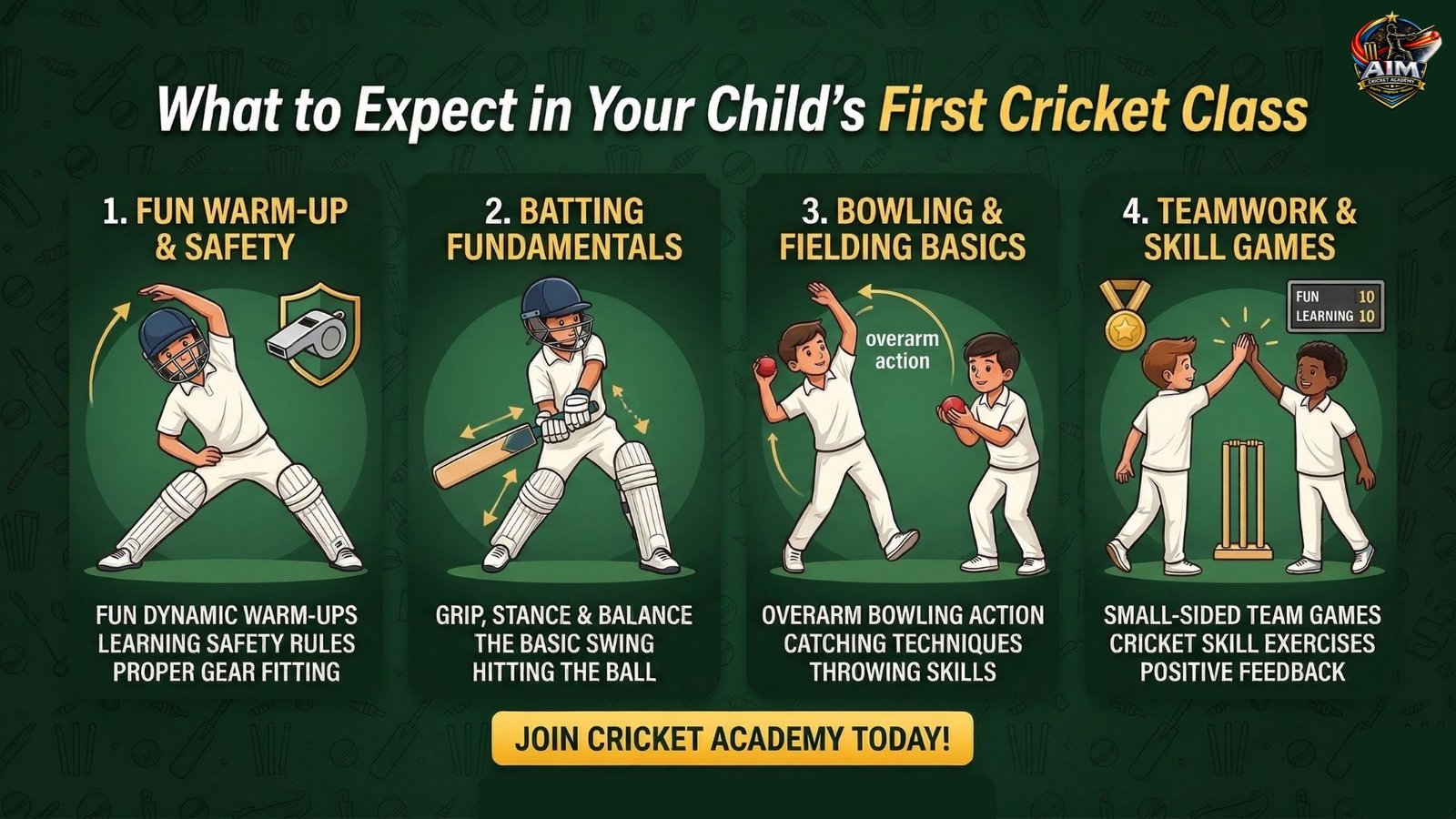
Expect a warm-up that doesn’t feel like a warm-up, running games, reaction drills, catching challenges. The fitness component is embedded into activities rather than announced as exercise. Young players who are having fun don’t notice they’re working.
Your child may look uncertain in these opening minutes. Watch for the moment they stop watching the other kids and start just doing. It usually comes sooner than parents expect.
What Skills Get Introduced First
First sessions focus on three foundational things regardless of age:
Grip and stance. Before a child ever faces a ball, they learn how to hold a bat and where to stand. These two things, done wrong from the beginning, take months to undo. Coaches spend real time here.
Catching and throwing. Hand-eye coordination is the engine of cricket. Basic catching drills, starting close, building distance, are immediately fun because success is quick and visible.
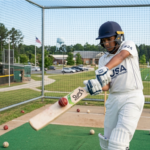
Facing a soft ball. Nobody bowls at pace in session one. Coaches use soft balls and gentle feeds. The goal isn’t technique yet, it’s simply making the child feel like they can do this.
What the first session is not: a tryout. Nobody is being evaluated for a squad.
What to Do as a Parent During the Session
Watch from a respectful distance. Children perform differently when they feel observed versus when they feel free to try and fail.
Resist coaching from the sideline. Even if you play cricket seriously, stay quiet. Your child has a coach. The moment they’re processing two sets of instructions simultaneously, neither one lands.
On the drive home, ask good questions: not “were you the best?” but “what was the hardest part?” or “did you like the catching drills?” These open a conversation rather than put a child under pressure to deliver a verdict.
What Your Child Might Say Afterward
Some kids climb into the car buzzing, already asking when the next session is. Others are quiet, still absorbing it.
A child who says “it was okay” after their first cricket class is not telling you it was a failure. They’re telling you it was new. New things feel like “okay” until they become familiar — and familiar things, done consistently, become the ones they love.
The only real red flag is active distress that goes beyond shyness or tiredness. Everything else is normal first-day noise.
That transformation starts in the first class. It just doesn’t look like transformation yet, it looks like a kid nervously picking up a bat for the first time in a gym in the Twin Cities.
Which is exactly where it should start.
Ready to book your child’s free trial? AIM Cricket Academy runs programs across Apple Valley, Bloomington, Burnsville, Chaska, Eagan, Eden Prairie, Lakeville, Plymouth, Shakopee, and Woodbury.